

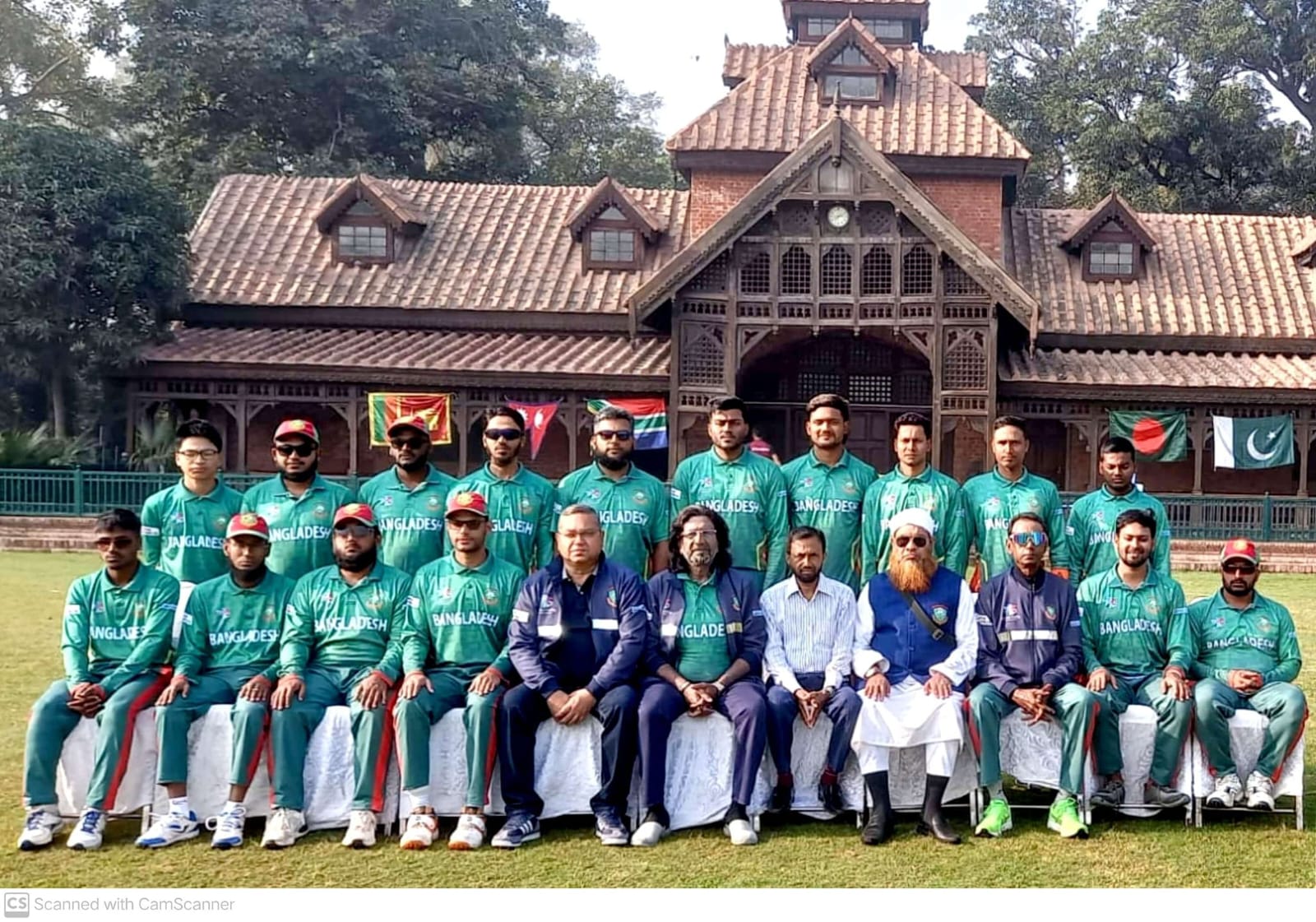
Blind cricket is a modified version of the game that allows people with various degrees of visual impairment to compete. The rules are governed by the World Blind Cricket Council (WBCC) and are based on standard MCC laws with specific adaptations for accessibility.
Player Classifications
Players are categorized into three groups based on their level of visual acuity. This ensures a fair distribution of vision across both teams.
| Category | Description | Identifying Mark (Typical) |
| B1 | Totally Blind: No light perception or inability to recognize hand shapes. | White wristband or 1 white stripe. |
| B2 | Partially Blind: Can recognize hand shapes up to a visual acuity of 2/60. | Red wristband or 2 white stripes. |
| B3 | Partially Sighted: Visual acuity from 2/60 up to 6/60. | Blue wristband or 3 white stripes. |
Team Composition
A standard playing XI must maintain a specific balance of these categories:
-
Minimum of 4 B1 players (Totally blind).
-
Minimum of 3 B2 players (Partially blind).
-
Maximum of 4 B3 players (Partially sighted).
Equipment & Field Adaptations
-
The Ball: Larger than a standard cricket ball and filled with ball bearings or lead shot to provide an audible “rattle” so players can track it by sound.
-
The Wickets: Usually made of metal tubes (to produce a distinct sound when hit) and painted in fluorescent colors (orange or yellow) for visibility. There are no bails.
-
The Pitch: Standard 22 yards, but boundaries are shorter (usually between 40 and 50 yards).
Key Gameplay Rules
1. Bowling (Underarm Only)
-
All bowling must be underarm.
-
The Verbal Cue: Before delivery, the bowler must ask, “Ready?” The batsman must reply, “Yes.” As the ball is released, the bowler must shout, “Play!” Failure to do so results in a No Ball.
-
Bounce Requirement: To be a legal delivery, the ball must pitch at least twice before reaching a B1 batsman and at least once for B2/B3 batsmen. It must not be rolling.
2. Batting & Scoring
-
Double Runs for B1: Any run scored by a B1 player (including boundaries) is doubled. A B1 hit to the boundary counts as 8 runs, and a “six” (on the full) counts as 12.
-
Runners: B1 players are required to have a runner. B2 players have the option for one.
-
The Sweep Shot: This is the most common technique used, as it provides the largest surface area to intercept the audible ball.
3. Fielding & Dismissals
-
One-Handed Catch: B1 players can dismiss a batsman by catching the ball on one bounce, provided it is a clean catch.
-
LBW & Hit Wicket: Some variations exempt B1 players from “Hit Wicket” dismissals. For LBW, the ball usually has to be “dead straight” or meet stricter criteria to ensure fairness for totally blind players.
-
Blackout Glasses: To ensure a level playing field, all B1 players must wear approved blackout glasses to prevent any residual light perception from giving an advantage.